1166 stories
·
0 followers

"The last straw"—RFK Jr.'s anti-vaccine ally angrily quits CDC panel after spat

1 Share

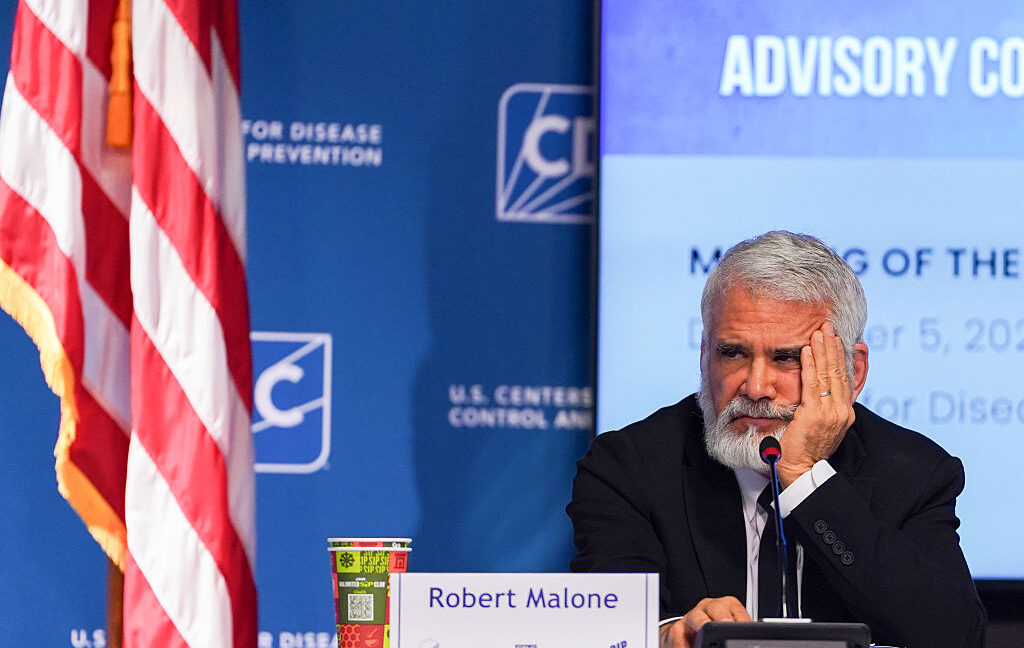
One of the federal vaccine advisors hand-selected by anti-vaccine Health Secretary Robert F. Kennedy Jr. has angrily resigned from his position, complaining of "drama" amid a spat with a spokesperson. Robert Malone—a former researcher turned outspoken anti-vaccine activist and conspiracy theorist—confirmed he was stepping down Tuesday afternoon to CQ Roll Call, which first reported the news.

He told the outlet that his decision to quit came after a "miscommunication" about the fate of the Centers for Disease Control and Prevention's Advisory Committee on Immunization Practices (ACIP). Kennedy had populated ACIP with anti-vaccine allies including Malone, who served as vice chair, after summarily firing all 17 experts on the panel last June. Last week, a federal judge temporarily blocked Kennedy's ACIP appointments, including Malone. He also stayed the changes that its members had made to federal vaccine guidance, as well as the dramatic overhaul of the childhood vaccine schedule Kennedy made without them. The judge ruled all the moves were likely illegal.

On Thursday, Malone claimed on social media that the Department of Health and Human Services (HHS) had disbanded ACIP and planned to completely reconstitute it (again), without appealing the judge's ruling or defending Kennedy's ACIP picks from the judge's claims that they were unqualified. But soon after, Malone retracted his claim, saying it was a miscommunication and that disbanding ACIP was merely one of the "options being considered."

Drama

HHS spokesperson Andrew Nixon then released a statement to media pointing to Malone's retraction and adding, "Unless officially announced by us, any assertions about what we are doing next is baseless speculation."

Malone told Roll Call today that Nixon's response was what led to his departure. "After Andrew trashing me with the press, I am done with the CDC and ACIP," Malone said in a text message Tuesday morning. "That was the last straw."

"Suffice to say I do not like drama, and have better things to do," he added.

HHS Assistant Secretary of Public Affairs Rich Danker and former ACIP Chair Martin Kulldorff, who now serves as the HHS chief science officer, then contacted Roll Call on Tuesday to provide a statement confirming Malone's departure and defending Nixon. "In light of the court ruling and the enormous amount of volunteer time provided by ACIP members to enhance public health, I can sympathize with [Malone's] decision to step away," Kulldorf reportedly said. "As for Andrew Nixon, I found him to be professional and honest in all his work supporting ACIP." Kulldorff and Danker declined further comment.

Malone, in contrast, wasn't done speaking. In further comments to The New York Times, he said his departure "was not an impulsive decision."

"Hundreds of hours of uncompensated labor, incredible hate from many quarters, hostile press, internal bickering, weaponized leaking, sabotage—I have better things to do," he said.

Joseph Hibbeln, another ACIP member selected by Kennedy who often disagreed with Malone, told the Times that Malone's stated wish to avoid drama "contrasts with his prior dramatic and confusing statements."

"It is good that Dr. Malone wishes now to decrease drama regarding vaccines," Hibbeln said.

Read full article

Comments


Read the whole story
Share this story
Delete

All of DOGE’s work could be undone as lawsuit against Musk proceeds

1 Share

Elon Musk must defend himself against a lawsuit alleging that he unlawfully seized too much power as the leader of the Department of Government Efficiency (DOGE), a judge ruled Monday.

According to the plaintiffs, Musk needed Senate confirmation before directing DOGE on drastic actions like eliminating agencies, mass firings, and steep budget cuts. Allegedly going far beyond the authority granted in President Donald Trump's most expansive DOGE executive orders, Musk took every inch of power granted and then increasingly used it to overreach unlike any presidential advisor who came before, the suit says.

In her opinion partly denying a motion to dismiss, US District Judge Tanya S. Chutkan did not buy the US government's defense that Musk held no office formally established by law—and therefore did not need Senate confirmation and cannot be alleged to have exceeded his authority under the Constitution's Appointments Clause.

"Nobody thinks, for instance, that the White House Chief of Staff or White House Counsel are officers in any fashion, despite the fact they may exercise tremendous influence across the government," the government's motion to dismiss said.

Chutkan called the defense "disquieting."

"Defendants appear to make the extraordinary argument that an individual who holds an important office and wields immense power is not subject to the Appointments Clause so long as the office was unlawfully created, and the power was unlawfully seized," Chutkan said.

"Under that interpretation, the President could evade Appointments Clause scrutiny by (1) usurping Congress’s power to create a principal office and assign it powers, and (2) unilaterally appointing an official to that office without Senate confirmation," the judge continued. "The court will not countenance such a two-fold attack on Congress’s role in our system of checks and balances," she wrote, noting that "if the President unilaterally creates a principal office, endows it with unlawful powers, and fills it without Senate confirmation, that is more—not less—reason for Appointments Clause scrutiny."

Chutkan also declined to view Musk's influence as akin to that of Trump's cabinet members, writing that "the alleged powers of the head of DOGE are clearly weighty and important."

For now, plaintiffs have shown enough to allege that as DOGE's head, Musk exercised "almost 'unchecked' discretion" and received "minimal supervision." Reporting only to Trump, it seemed plausible that Musk could take any step he wanted, knowing he would get the "rubber stamp" of the president.

At this stage, the judge emphasized that "plaintiffs have adequately pled that the head of DOGE is an officer of the United States" and that the position still unlawfully exists in government. And while DOGE is scheduled for termination on July 4, 2026, "there is no termination date for the overarching DOGE entity or its leader, suggesting permanence," plaintiffs had noted.

The lawsuit was raised by nonprofits that were allegedly harmed by DOGE's broad government cuts. Their case was later consolidated with a similar lawsuit brought by a coalition of states led by New Mexico. It was filed in February 2025, before Musk left DOGE in May, and plaintiffs alleged that their claims about Musk's unchecked power also apply to his successors.

In a loss, every harmful move that DOGE made could possibly be undone.

"If Plaintiffs prevail on their claim that Musk was not constitutionally appointed and therefore lacked authority to exercise the power of a principal officer, the court could vacate Musk-initiated policies or cuts that are causing Plaintiffs ongoing harm," Chutkan wrote.

Musk may regret X posts bragging about DOGE

Unsurprisingly, Musk's posts on X were cited in the lawsuit as part of "ultra vires" claims that the executive branch made an "extreme legal error" in allowing him to assume an outsize government role.

On X, Musk made several posts suggesting that DOGE was operating at his direction, plaintiffs alleged in their complaint. That included posts like “USAID is a criminal organization. Time for it to die.” Additionally, Musk posted, "What is this ‘Department of Education’ you keep talking about? I just checked and it doesn’t exist," prior to Trump confirming he told Musk to look into the department. And perhaps most damning to the government's defense, in reference to the Consumer Financial Protection Bureau—which senators claimed Musk long wanted to kill off—Musk posted, "CFPB RIP."

The Office of Personnel Management also seemed to borrow Musk's exact template for a "Fork in the Road" email giving government employees an option to resign and accept buyouts. Musk sent a similar email after taking over Twitter as he quickly moved to reduce staff.

Again, the government tried to claim that Musk couldn't be doing anything wrong in the role because he wasn't violating any specific statute in this unique role.

The judge rejected that logic. Pointing to Musk's X posts and other public statements from the White House and DOGE officials, Chutkan said that plaintiffs had shown enough evidence that "defendants are exercising immense power without any grant of statutory authority whatsoever. That is the sort of 'extreme legal error' that can sustain a claim for ultra vires review."

As the lawsuit proceeds, plaintiffs will try to prove what many critics claimed was obvious after Trump appointed Musk as a special government employee: that Musk was acting as president.

Perhaps notably, Musk claimed on X—after his breakup with Trump—that Trump would have never won the election without his support.

Although Musk never claimed to be acting as president, he deemed himself "first buddy" in another X post, which lawmakers cited as a sign that Musk was acting as "co-president." Among the critics was Senator Bernie Sanders, who wrote on X that Musk seemed to be pulling the strings and became $200 billion richer after Trump got elected.

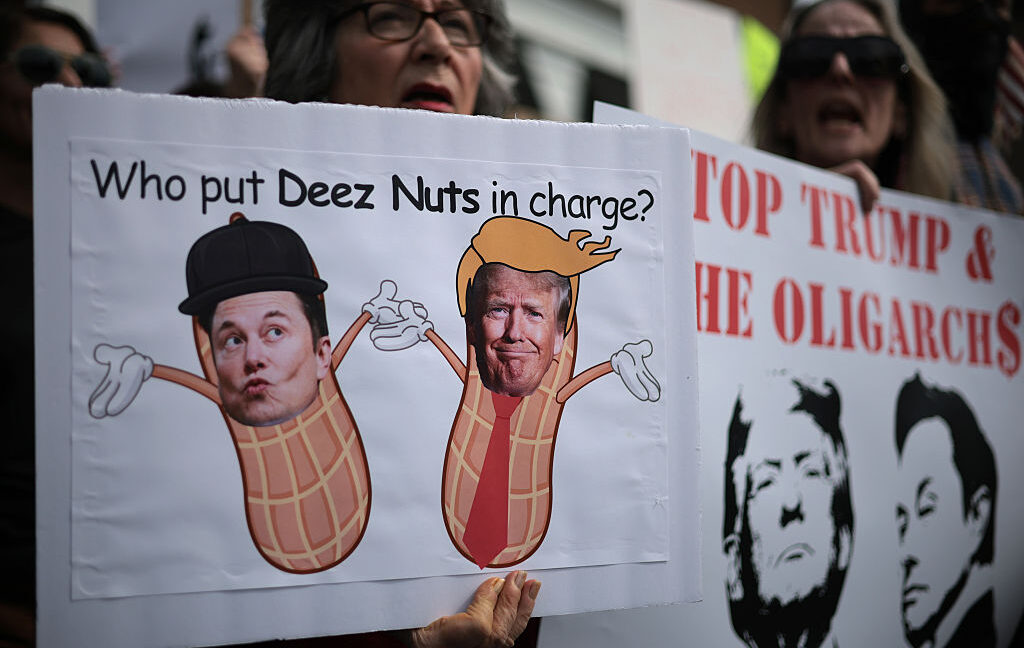
"Are Republicans beholden to the American people?" Sanders said. "Or President Musk? This is oligarchy at work."

For plaintiffs, the lawsuit is not about Musk as an individual, though. They allege that without an injunction preventing further government cuts and an order undoing DOGE's worst work, Americans will continue to suffer from Musk's unprecedented power grab even as his successors maintain DOGE's mission.

Elon Musk "has roamed through the federal government unraveling agencies, accessing sensitive data, and causing mass chaos and confusion for state and local governments, federal employees, and the American people," plaintiffs argued. "Oblivious to the threat this poses to the nation, President Trump has delegated virtually unchecked authority to Mr. Musk without proper legal authorization from Congress and without meaningful supervision of his activities. As a result, he has transformed a minor position that was formerly responsible for managing government websites into a designated agent of chaos without limitation."

Read full article

Comments


Read the whole story
Share this story
Delete

China Is Mass-Producing Hypersonic Missiles For $99,000

1 Share
Longtime Slashdot reader cusco writes: A private company in China has developed hypersonic missiles that cost the same as a Tesla Model X. This missile, the YKJ-1000, is being marketed for sale at a reported price of $99,000, and it's in mass production now after successful tests. That is far below what countries will spend to target and shoot down the missile if it's heading their way. Besides the low cost, they can be launched from anywhere. The launcher looks like any one of the tens of millions of shipping containers floating around on the ocean, or sitting at ports, or riding along on trucks, or sitting on industrial lots. The launchers for these missiles are hiding in plain sight, in other words. Whatever tactical advantages great-power countries have in ballistics is going away, fast; 1,300 kilometers is 800 miles, and so the range is anything within 800 miles of wherever someone can send a shipping container. To keep the price down, the missile is reportedly using civilian-grade materials and widely available commercial parts, along with simpler manufacturing methods like die-casting. There are also broader savings from tapping mature supply chains and using China's large-scale civilian industrial base.

Read more of this story at Slashdot.

Read the whole story
Share this story
Delete

How can I change a dialog box’s message loop to do a Msg­Wait­For­Multiple­Objects instead of Get­Message?

2 Shares

A customer wanted to know how to change a dialog box’s message loop so that it used Msg­Wait­For­Multiple­Objects instead of Get­Message. (I’m guessing that they had a handle that they wanted to wait on while the dialog was up.) The standard dialog box message loop checks only for messages, not kernel handles.

One way to do it is to replace the modal dialog box with a modeless one and run your own message loop. However, there’s a key piece missing from the do-it-yourself, which is that there is no way to know whether the dialog procedure has called End­Dialog, and if so, what result code it passed.

So maybe you’re displaying somebody else’s dialog box and therefore cannot alter the dialog procedure to set a different flag when it wants to end the dialog. What can you do to customize the dialog loop from the outside?

Dialog boxes send their owner the WM_ENTER­IDLE message when they have run out of work to do and are about to block waiting for a message. if the handler of the WM_ENTER­IDLE message returns, and there is no posted message in the queue, then the dialog box goes to sleep and waits for a message to come in.

As the name of the message suggests, one way to use the WM_ENTER­IDLE message is to handle the message by doing do background idle-time activity, and then return when there is a message for the dialog box to process. For example, maybe you want to do spell checking when the user is idle.

Another way to use the WM_ENTER­IDLE message is to take over how the dialog message loop waits for a message. You can do your own thing, and return when there is a posted message that needs processing.

So let’s try it. Just for demonstration purposes, we’ll create a waitable timer that beeps every two seconds while a common file open dialog is up.

Start with our scratch program and make these changes. Remember that error checking has been elided for expository purposes.

#include <commdlg.h>

HANDLE hTimer;

void OnChar(HWND hwnd, TCHAR ch, int cRepeat)
{
    if (ch != ' ') return;

    hTimer = CreateWaitableTimerW(nullptr, FALSE, nullptr);

    LARGE_INTEGER twoSeconds;
    twoSeconds.QuadPart = -2 * wil::filetime_duration::one_second;
    SetWaitableTimer(h, &twoSeconds, 2000, nullptr, nullptr, FALSE);

    TCHAR buffer[MAX_PATH]{};
    OPENFILENAME ofn{};
    ofn.lStructSize = sizeof(ofn);
    ofn.hwndOwner = hwnd;
    ofn.lpstrFilter = TEXT("All Files\0*.*\0");
    ofn.nFilterIndex = 1;
    ofn.lpstrFile = buffer;
    ofn.nMaxFile = ARRAYSIZE(buffer);
    GetOpenFileName(&ofn);

    CloseHandle(hTimer);
    hTimer = nullptr;
}

Our WM_CHAR handler ignores all characters other than the space bar. But if you press the space bar, it creates a waitable timer that triggers every two seconds, and then it displays a dialog: In this case, it’s the common file open dialog. When the dialog is finished, we close the timer since we don’t need it any more. This is just setting up the environment for our WM_ENTER­IDLE handler to do its magic.

The interesting work happens in the next function.

void OnEnterIdle(HWND hwnd, UINT source, HWND hwndSource)
{
    if (!hTimer) return;

    MSG msg;
    while (true) {
        DWORD result = MsgWaitForMultipleObjects(1, &hTimer,
                                FALSE, INFINITE, QS_ALLINPUT);
        switch (result) {
        case WAIT_OBJECT_0:
            MessageBeep(~0);
            break;

        case WAIT_OBJECT_0 + 1:
            if (PeekMessage(&msg, nullptr, 0, 0, PM_NOREMOVE)) {
                return;
            }
            break;

        default:
            FAIL_FAST_HR(E_UNEXPECTED);
        }
    }
}

When we get a WM_ENTER­IDLE message and there is no timer handle, then just return without doing anything, allowing the dialog box message loop to go idle.

But if we have a timer handle, then we use the Msg­Wait­For­Multiple­Obcjets function to wait for either the timer handle to be signaled or for a message to arrive. If it was the timer handle, we beep. If it was a message, we call Peek­Message to process any inbound Send­Message calls and see if there’s a posted message waiting. if so, then we leave it in the message queue (PM_NO­REMOVE) for the dialog loop to pick up and return. If we get any other code, then something went horrible wrong, and we fail fast.

Now we can hook these up to our window procedure.

    HANDLE_MSG(hwnd, WM_CHAR, OnChar);
    HANDLE_MSG(hwnd, WM_ENTERIDLE, OnEnterIdle);

When the common dialog box goes idle, the internal dialog message pump sends a WM_ENTER­IDLE message to the owner (which is us), and we do our handle stuff until a posted message is ready.

When you run this program, press the space bar, and you get a happy common dialog box, accompanied by some annoying beeping.

I pulled a trick here. Maybe you noticed it. We’ll look at it next time.

The post How can I change a dialog box’s message loop to do a <CODE>Msg­Wait­For­Multiple­Objects</CODE> instead of <CODE>Get­Message</CODE>? appeared first on The Old New Thing.

Read the whole story
Share this story
Delete

Trump Administration To Pay French Company $1 Billion To Stop Offshore Wind Farms

2 Shares
An anonymous reader quotes a report from NPR: The Trump administration will pay $1 billion to a French company to walk away from two U.S. offshore wind leases as the administration ramps up its campaign against offshore wind and other renewable energy. TotalEnergies has agreed to what's essentially a refund of its leases for projects off the coasts of North Carolina and New York, and will invest the money in fossil fuel projects instead, the Department of Interior announced Monday. The Trump administration has tried to halt offshore wind construction, but federal judges overturned those orders. Environmental groups denounced the TotalEnergies deal as an alternate way to block wind projects. President Donald Trump has gone all in on fossil fuels, which he says is the way to lower costs for families, increase reliability and help the U.S. maintain global leadership in artificial intelligence. TotalEnergies pledged to not develop any new offshore wind projects in the United States. TotalEnergies CEO Patrick Pouyanne said in a statement that the company renounced offshore wind development in the United States in exchange for the reimbursement of the lease fees, "considering that the development of offshore wind projects is not in the country's interest." Pouyanne said the refunded lease fees will finance the construction of a liquefied natural gas plant in Texas and the development of its oil and gas activities, calling it a "more efficient use of capital" in the U.S. After it makes those investments, TotalEnergies will be reimbursed, up to the amount paid in lease purchases for offshore wind, according to the DOI.

Read more of this story at Slashdot.

Read the whole story
Share this story
Delete

RFK Jr.’s war on scientific expertise destroyed 27% of agency's advisor panels

1 Share

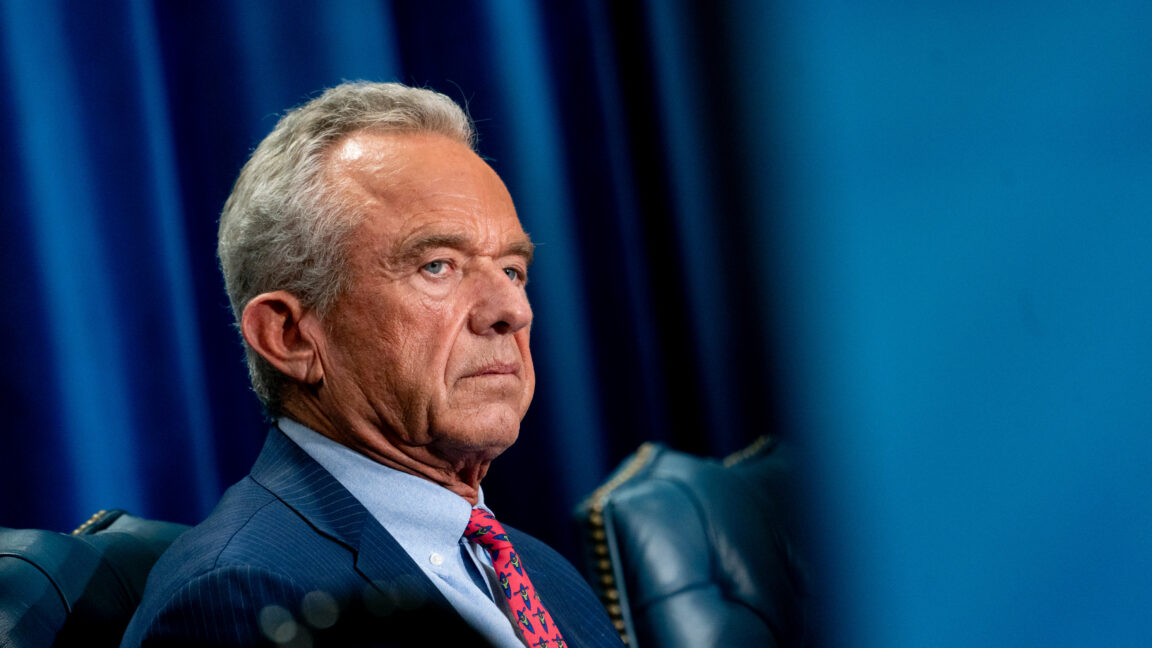
In his role as health secretary, Robert F. Kennedy Jr.—a long-time anti-vaccine activist with no background in science, medicine, or public health—has made headlines for his thorough perversion of the Centers for Disease Control and Prevention's vaccine advisory panel.

In June, Kennedy fired all 17 independent experts who made up the CDC's Advisory Committee on Immunization Practices, or ACIP. The panel sets federal vaccination guidance that dictates insurance coverage and influences state school requirements. Kennedy then repopulated ACIP with mostly unqualified allies who share his anti-vaccine views. The corrupted board went on to hold several chaotic meetings in which they voted, without scientific backing, to change vaccine policies to align with Kennedy's anti-vaccine agenda.

The blatant undermining of ACIP led a federal judge this week to temporarily block Kennedy's installed ACIP members and the anti-vaccine changes they made to CDC guidance. But while ACIP's corruption has drawn the spotlight, it's far from the only advisory committee Kennedy has destroyed or corrupted.

According to a new report by government watchdog Public Citizen, the Department of Health and Human Services (HHS) has terminated 75 federal advisory committees under Kennedy. That amounts to about 27 percent of the 273 panels of independent experts HHS relies on to shape scientific agendas, regulations, and policies.

Of the 75 that were cut, the bulk were at the National Institutes of Health; Kennedy cut 49 advisory committees, most of which were responsible for evaluating scientific grant applications. A recent analysis from Johns Hopkins researchers found that, as of March 3, the NIH has awarded 74 percent fewer competitive or new awards than the average for the same period in the 2021–2024 fiscal years, according to a report by Stat News.

Among the terminated advisory committees was the NIH Center for Scientific Review Advisory Council, which was established in 1988. The advisory council wasn't responsible for reviewing grant applications; rather, it advised NIH leaders on how to allocate research funds.

"Be incensed"

Beyond the NIH, the CDC had nine advisory committees terminated, among others, such as ACIP, that were undermined. Four were terminated at the FDA.

Terminated and otherwise undermined advisory committees included those that focused on childhood vaccines, heritable diseases in newborns and children, Alzheimer's disease, health equity, healthcare infection control, rural health, novel and exceptional technology, long COVID, and the US Preventive Services Task Force (USPSTF), the report finds.

In January, HHS appointed 21 new members to the Interagency Autism Coordinating Committee, an advisory panel that monitors autism research and progress on causes, prevention, diagnosis, and treatment. At least eight of the new members believe, as Kennedy does, the debunked claim that vaccines cause autism. In response to the appointments, autism researchers and advocates formed a competing nongovernmental advisory committee to counter the anticipated misinformation from the federal panel.

At the FDA, terminated advisory committees focused on arthritis, medical imaging drugs, pharmaceutical sciences, and patient engagement.

In all, the report finds that Kennedy's attack on these expert advisory committees is undermining the biomedical enterprise and overall health of the US—and that the damage may be difficult to quickly reverse.

"All Americans, including patients, lawmakers, and scientists, have every right to be incensed at the damage Trump has done to federal health advisory committees," Michael Abrams, a senior health researcher at Public Citizen and author of the report, said. "Trump’s actions are undermining biomedical research, long-standing processes for the approval of new drugs and medical devices, and federal vaccine policy. Silencing and biasing external experts makes HHS vulnerable to stagnation and corruption that erodes the health of all Americans."

Read full article

Comments


Read the whole story
Share this story
Delete
Next Page of Stories